
CORRECTIONAL SERVICES PS ATTENDS 38TH NCAJ MEETING
By Nicholas Kigondu
Chief Justice Martha Koome says the country’s justice sector remains committed to building a justice system that is coordinated, people-centred and capable of responding to emerging challenges while remaining faithful to the Constitution.
Speaking in Mombasa during the 38th session of the National Council on Administration of Justice, the Chief Justice said the commitment is meant to ensure that the justice chain functions as one coherent system that is efficient, coordinated, accountable and centred on the needs of the people.
She said no single institution can, on its own, deliver the aspiration of an effective system of justice.
“The challenges confronting our justice sector are increasingly complex and interconnected, requiring coordinated, collaborative and innovative responses. That is precisely why the National Council on the Administration of Justice exists.” She told the forum.
While highlighting diverse justice-sector reforms, she noted that the proposed Open Prison Model provides an opportunity to explore innovative rehabilitation approaches that prepare offenders for successful reintegration while safeguarding public safety. The model, she said, could reduce recidivism, improve rehabilitation outcomes and strengthen collaboration between justice, health, probation, correctional and community institutions.
Speaking at the same forum, Correctional Services Principal Secretary Dr. Salome Beacco said her department has initiated a host of reforms aimed at enhancing rehabilitation and improving service delivery.
Among the reform agenda items are the digitisation of operations within the department, which she said is now a core priority for modernising offender management, enhancing rehabilitation, and improving service delivery.
“From my perspective, digitising correctional services in Kenya presents a unique set of challenges, but equally transformative opportunities.” She observed.
She said the plan, which includes the development of the Integrated Correctional Management Information System (ICMIS) and the Offender Management Information System (OMIS), will enhance offender management and inter-agency collaboration, expand access to education and rehabilitation, and improve transparency, accountability, and resource allocation.
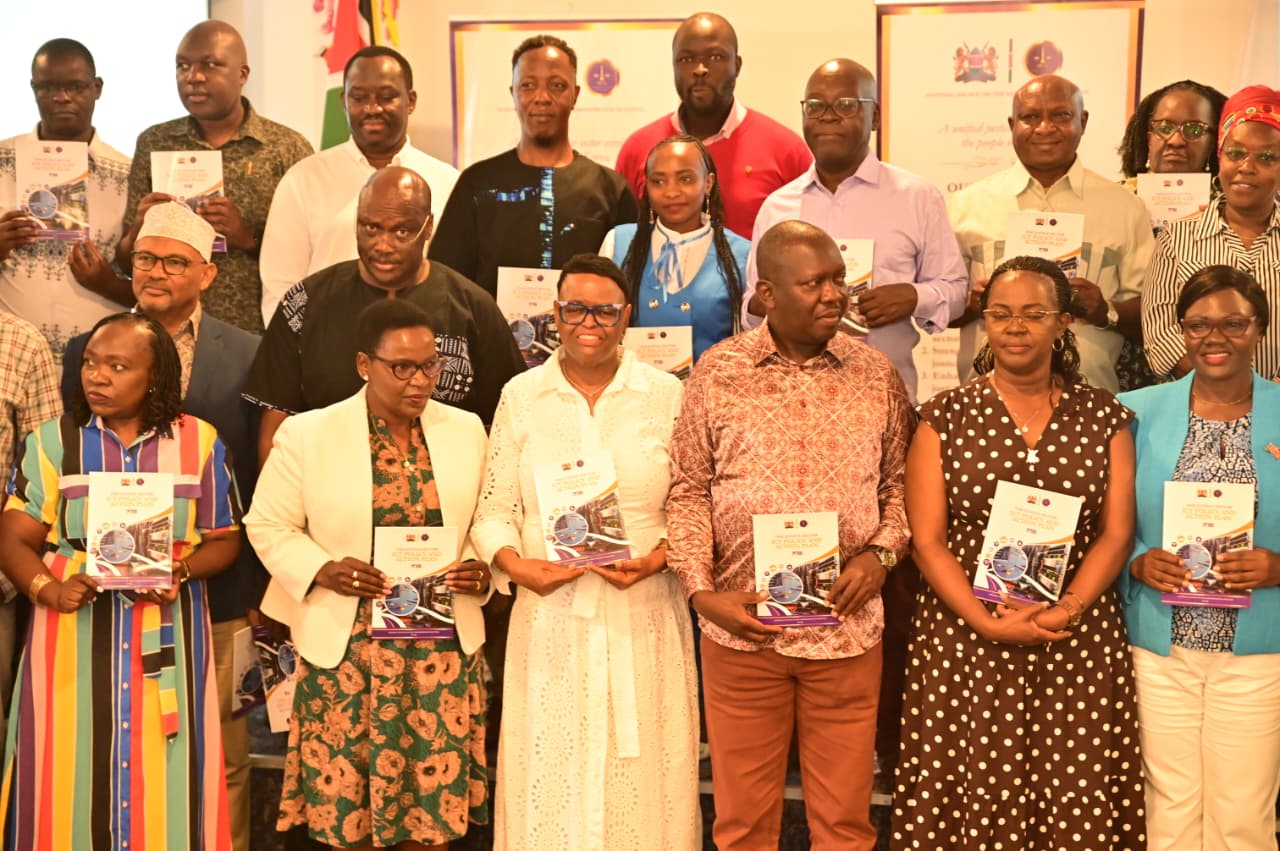
During the forum, the Council launched five reform instruments that it said exemplify what is possible when institutions work together towards a common public purpose. They included the Justice Sector ICT Policy and Action Plan, Standard Operating Procedures on Sexual and Gender-Based Violence, Standard Operating Procedures for the Effective Undertaking of Service Delivery Initiatives, as well as the People-Centred Justice Guidelines and Study.
The meeting is also set to consider several other strategic reforms, among them the Draft Sexual Offences Amendment Bill, review progress towards the operationalisation of Instant Traffic Fines, deliberate on Wildlife Crime, National Guidelines on Interviewing Children in the Justice System, strengthen Identification Parade Procedures as well as facilitate coordinated planning on election preparedness ahead of next year’s General Election.
The meeting was also attended by, among others, Gender Principal Secretary Anne Wang'ombé, Children Services PS Carren Ageng’o. IEBC Chairperson Erastus Ethekon, Director of Criminal Investigations Mohamed Amin, Commissioner General of Prisons Patrick Aranduh and Acting Probation and Aftercare Secretary Shadrack Kavutai.